Mortgage rates climbing back above 7% isn’t the news anyone wanted to hear. But it’s also shifting the housing market in ways that could make a difference whether you’re looking to buy or sell a home.
There are more homes for sale than there were at this time last year, and the interesting part is that it’s not mainly because more homes are hitting the market. It’s because homes are taking longer to sell.
Here’s what’s behind this trend and what it could mean for you if you’re planning to buy or sell a home.
Inventory Growth Is Picking Up Steam
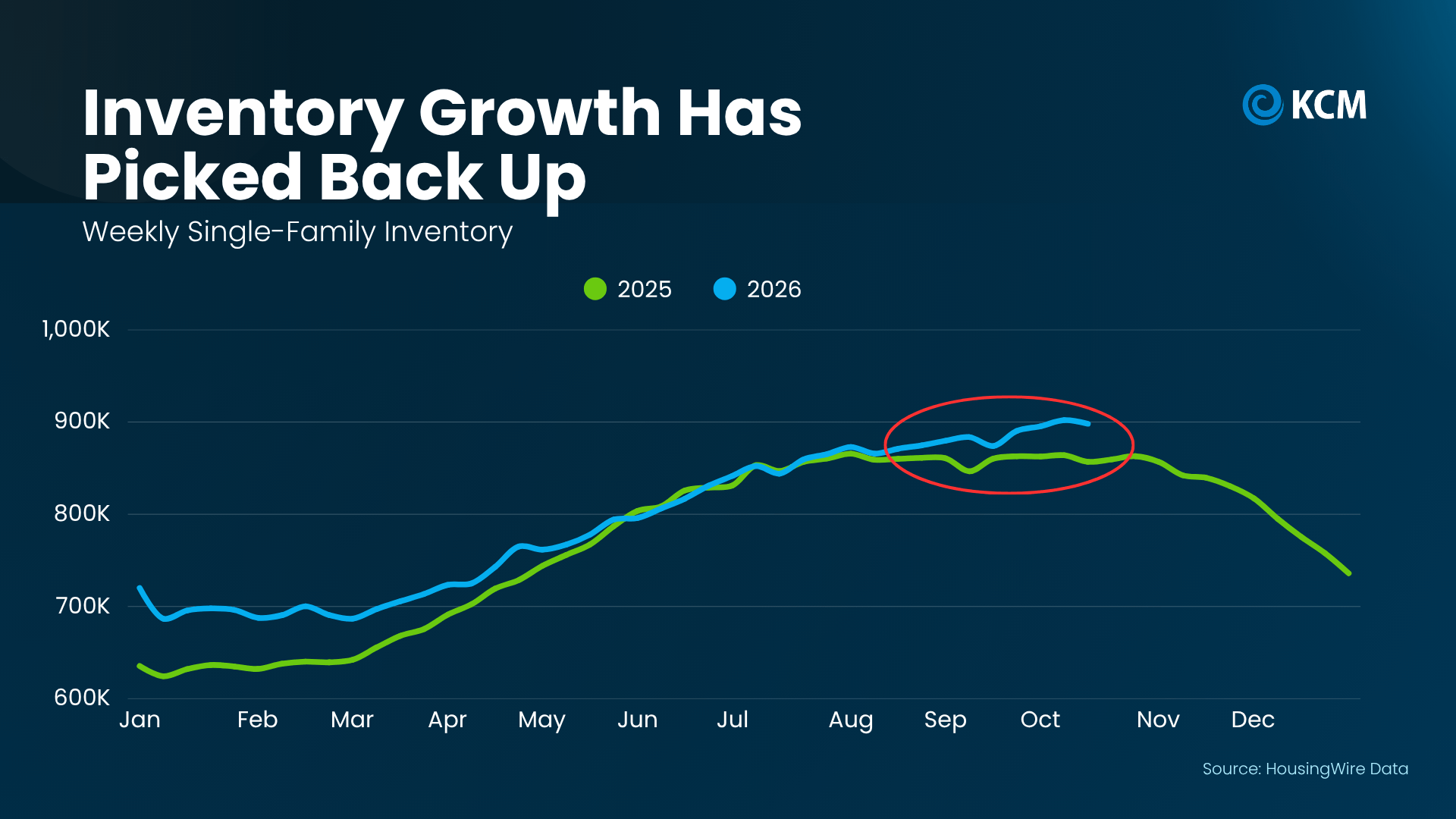
According to HousingWire Data, inventory growth slowed for much of the past year but has picked up again in recent weeks. You can see that trend in the graph below by looking at the blue line.
And the reason behind this change might surprise you.
When mortgage rates go up, some buyers decide to wait. That means fewer homes sell each week. As those homes stay on the market while new listings come in, the number of homes for sale begins to grow. You can see this in the blue line on the graph below.
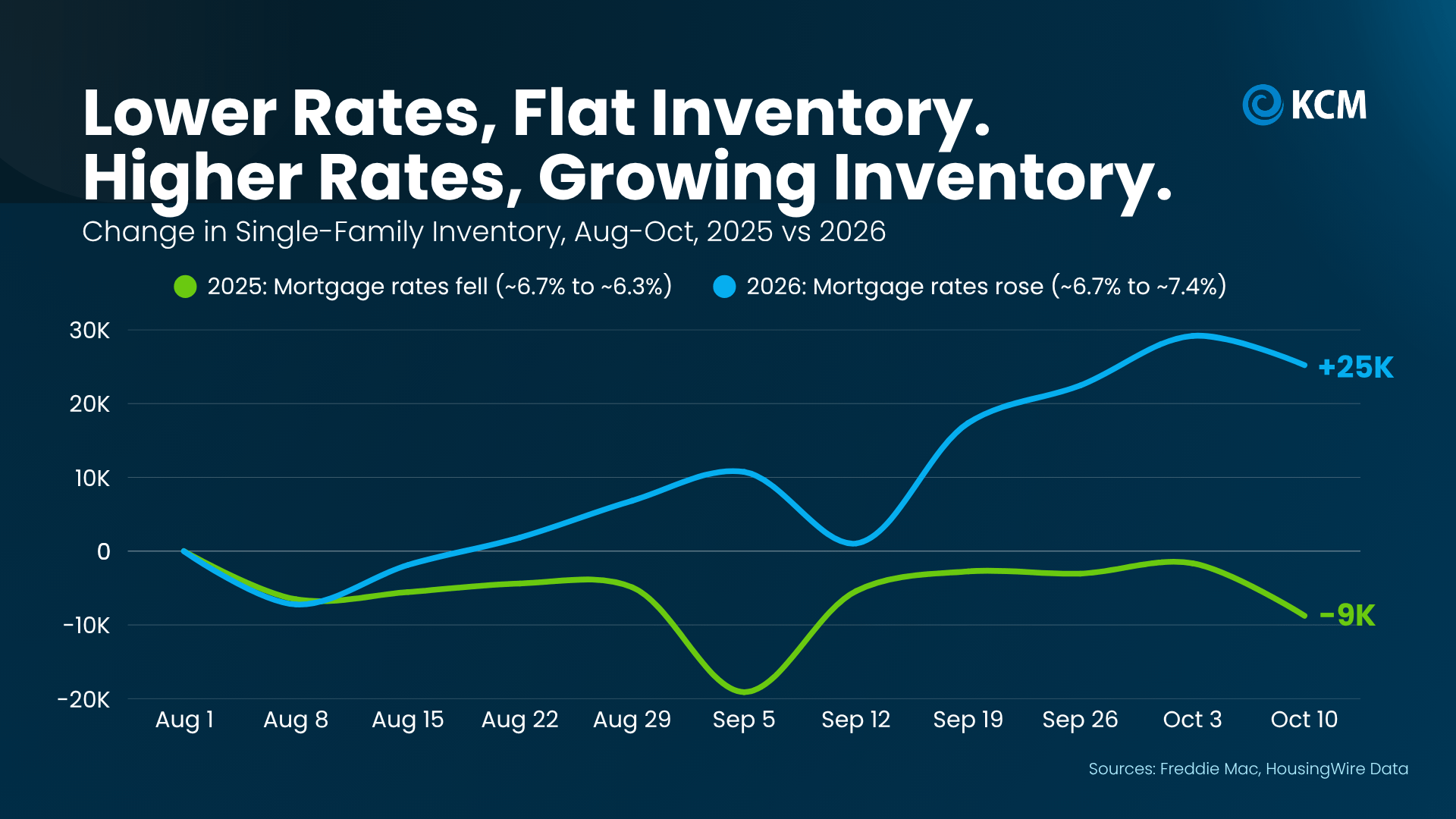
Here’s another way to see what’s happening. The graph below shows how mortgage rates affect the number of homes for sale. This year is shown by the blue line, while last year is represented by the green line.
With mortgage rates gradually rising this year, the number of homes for sale has increased by about 25,000. But around this time last year, rates were falling, more buyers jumped back into the market, and inventory actually dropped by about 9,000 homes.
Logan Mohtashami, Lead Analyst at HousingWire, explains how the housing market has shifted from 2025 to 2026.
““With mortgage rates over 7%, demand tends to soften and inventory rises . . .”
”
Homes Are Spending More Time on the Market
Another way to see how mortgage rates are affecting the market is by looking at how long homes take to sell. According to Realtor.com, the typical home spent 61 days on the market this September, compared to just 41 days in September 2021. You can see the difference in the graph below.
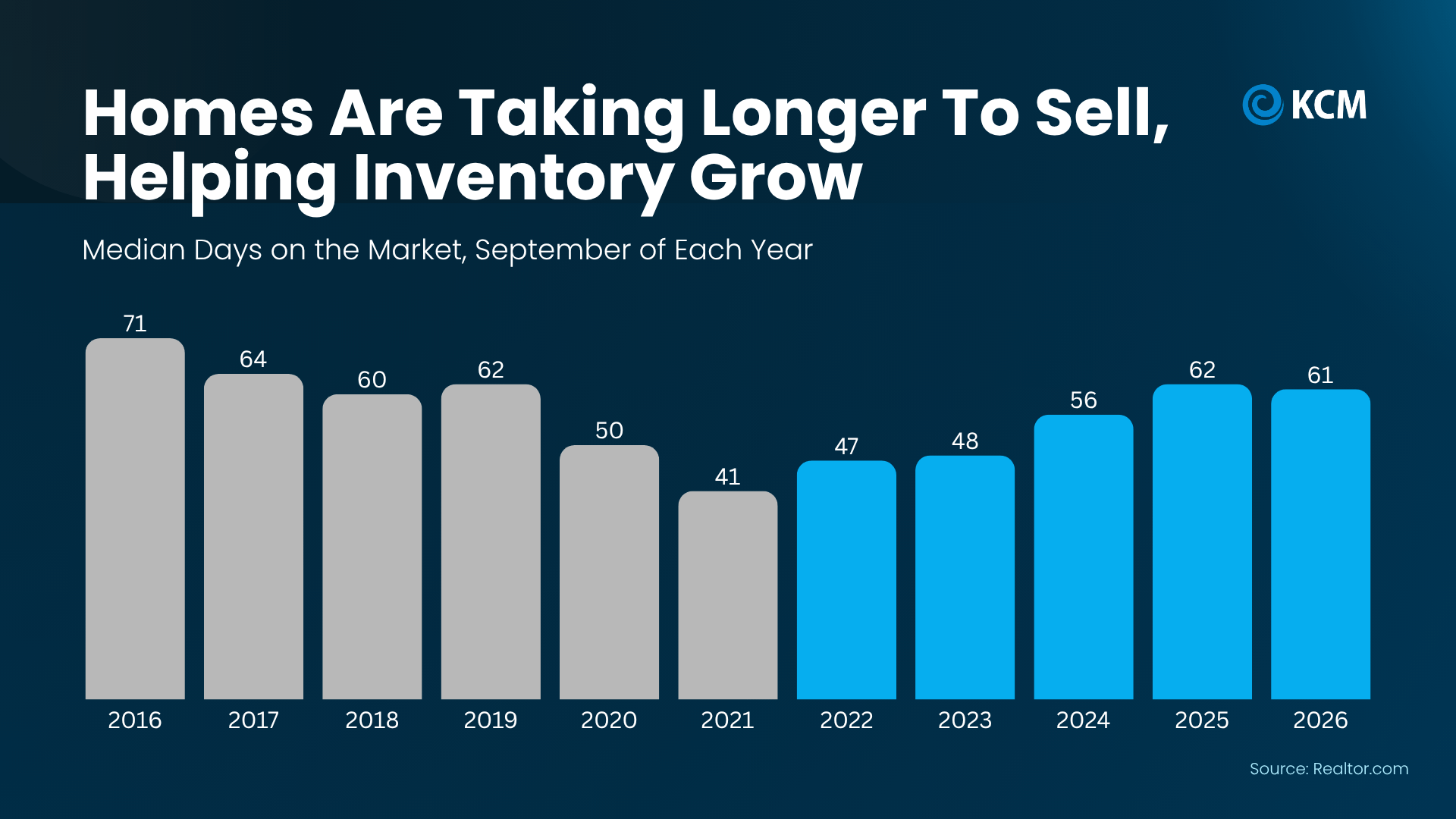
Here’s what this means. Back in 2021, low mortgage rates brought more buyers into the market, so homes sold quickly. Today, with rates a little higher, fewer buyers are jumping in, which means homes are taking longer to sell.
How To Make This Market Work for You
So, what does this mean if you’re planning to move? It really depends on whether you’re buying or selling a home.
If you’re buying, having more homes to choose from means less pressure to rush into a decision and more room to negotiate. If a home has been sitting on the market for a while, the seller may be more open to negotiating not just the price, but also repairs, closing costs, or even helping lower your mortgage rate.
Of course, not every seller will be willing to negotiate. But compared to the competitive market a few years ago, buyers have more negotiating power today.
If you're selling, having the right strategy matters more than ever. With more homes to choose from, buyers can be more selective, so your home needs to stand out. Start by pricing it right, making a great first impression, and working with your agent to show buyers what makes your home special. Homes are still selling, but the key is making sure yours attracts the right buyer.
The housing market is still moving, just at a different pace. Whether you’re buying or selling, having the right strategy can help you navigate these changes with confidence.
Bottom Line
In many areas, more homes are hitting the market, and properties are taking a little longer to sell. Knowing this can help you make smarter decisions and choose the right strategy from the start.
Whether you’re buying or selling, let’s take a look at how long homes are staying on the market in your neighborhood so we can make sure your offer or asking price fits today’s market.