It’s been almost 20 years since the 2008 housing crash, but the word “foreclosure” can still make people nervous. If you’re thinking about moving, you may be wondering whether rising foreclosures could mean more homes hitting the market, especially with all the recent headlines.
Buyers may be hoping to find more great deals, while sellers may be worried about increased competition. But the latest data tells a different story. Understanding what’s really happening can help you make your next move with confidence.
A Modest Rise from a Low Starting Point
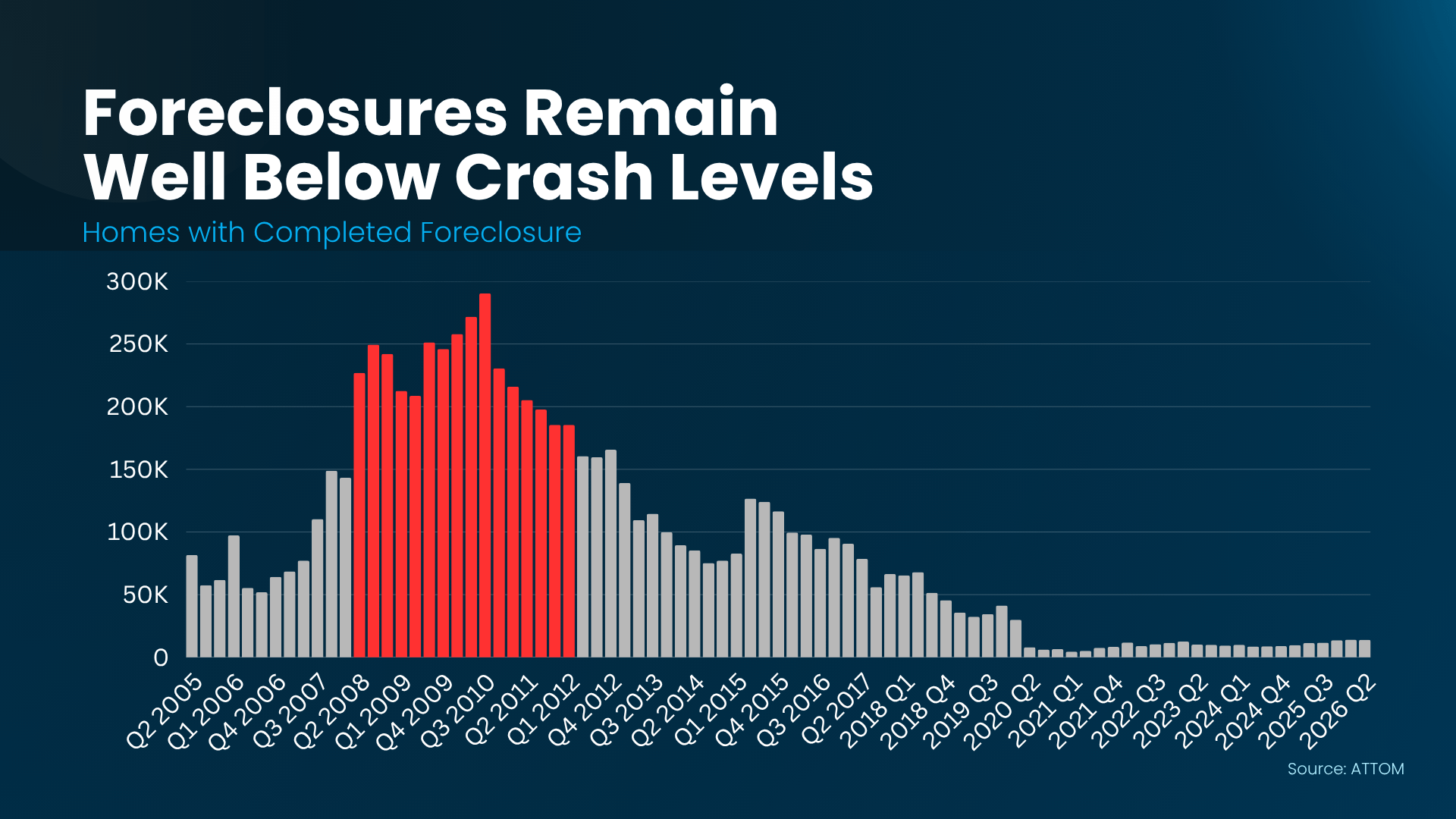
According to ATTOM, completed foreclosures are up 33% compared to last year. That may sound like a big increase, but it’s important to look at the bigger picture.
Even with that increase, foreclosures are still about 26% lower than they were during the first half of 2020.
Looking at the bigger picture, today’s foreclosure activity is still nowhere near the levels seen during the 2008 housing crash. According to ATTOM, lenders completed about 28,000 foreclosures in the first half of 2026. Compare that to the crash years, shown in red, when lenders often completed more than 200,000 foreclosures in just a few months (see graph below).
Experts say the current numbers show that the housing market is still on solid ground. As Rob Barber, CEO of ATTOM, explains:
““While some homeowners are still facing financial challenges, overall foreclosure volumes remain well below historical norms and the broader housing market continues to demonstrate resilience.”
”
Here’s why the market can handle the small increase in foreclosures we’re seeing.
Homes for Sale Are Back in a Balanced Range
During the 2008 crash, many homeowners lost their homes to foreclosure or had no choice but to sell. This flooded the market with homes for sale. Today, we’re not seeing anything like that.
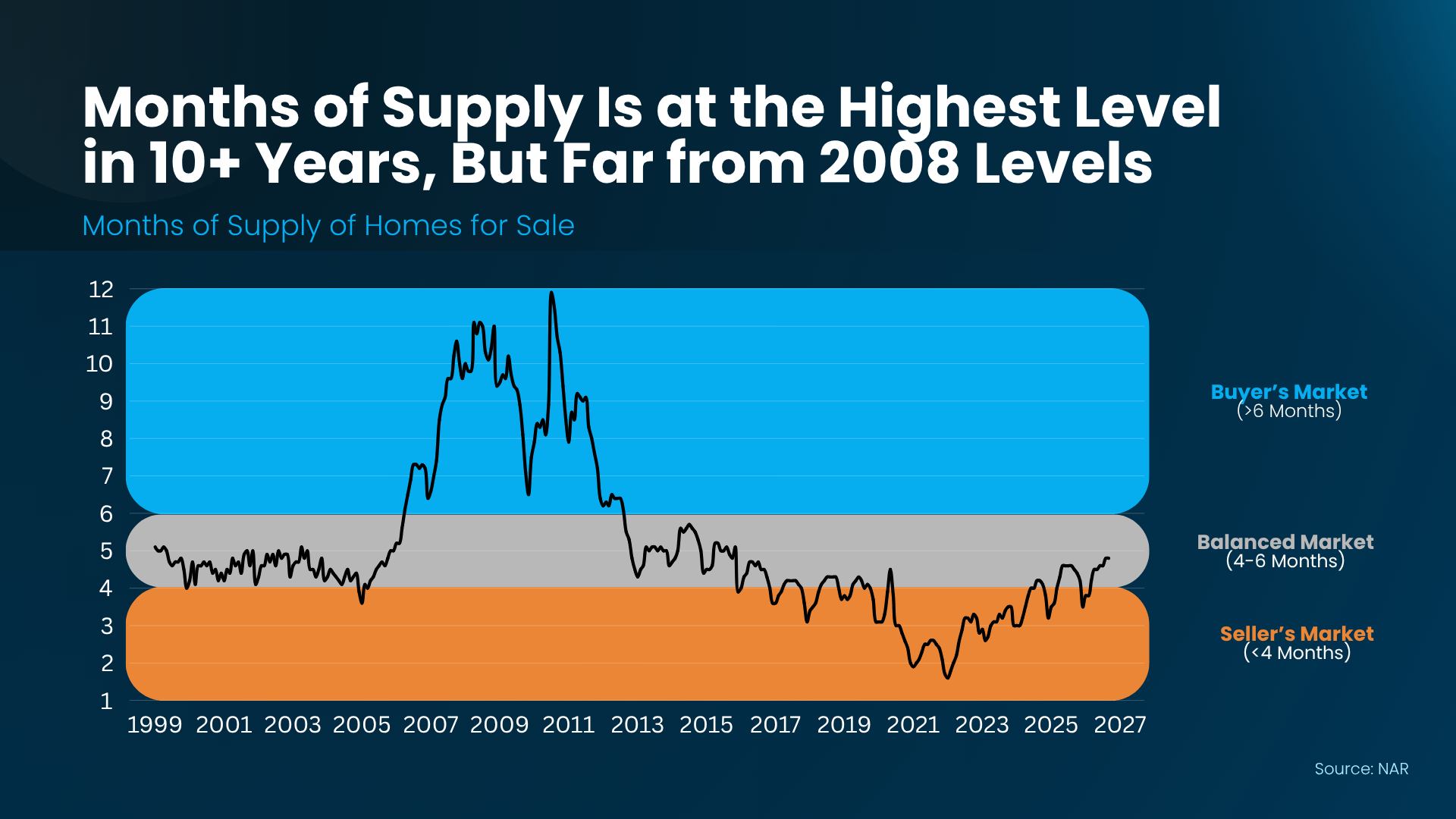
One way to understand this is by looking at months of supply, which shows how long it would take to sell all the homes currently on the market at today’s sales pace. A balanced market typically has four to six months of supply.
According to the National Association of Realtors (NAR), we currently have about 4.8 months of housing supply. That puts the market in a fairly balanced position and is less than half the level reached during the last housing crash (see graph below).
If foreclosures were truly on the rise, we’d see more homes flooding the market. As Logan Mohtashami, Lead Analyst at HousingWire, explains:
““. . . a surge of actual foreclosures in 2026 would have easily put the inventory data much higher in 2026.”
”
Equity Gives Today’s Homeowners Options
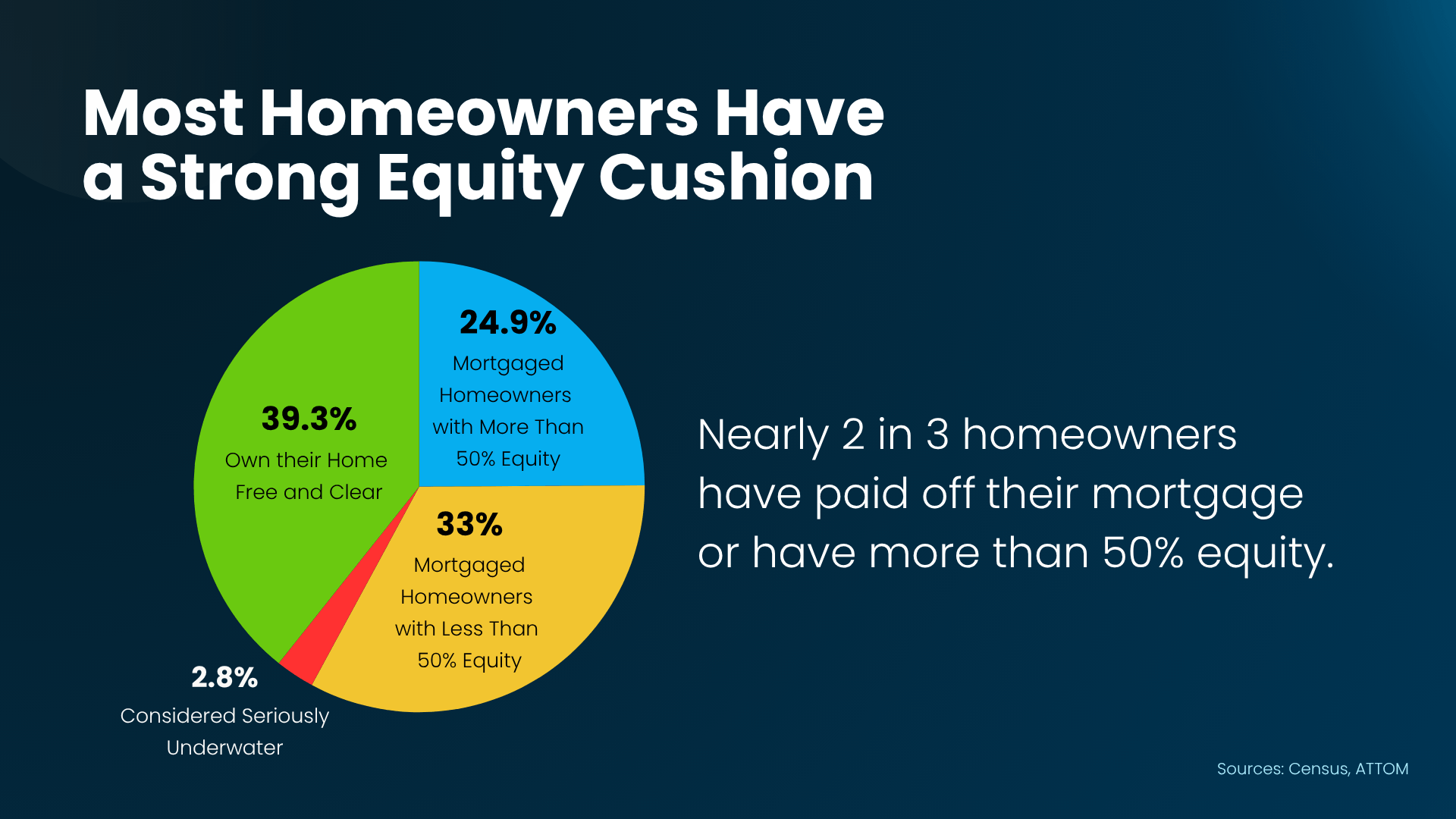
Homeowners have built up a lot of equity, which is one reason we aren’t seeing a wave of distressed sales. Data from the Census Bureau and ATTOM shows that nearly two out of three homeowners have either paid off their mortgage or have more than 50% equity. Cotality also reports that the average homeowner has about $310,000 in equity.
When homeowners have built up equity and run into financial difficulties, they often have the option to sell their home, pay off their mortgage, and still walk away with money. That wasn’t the case for many homeowners during the last crash. According to HousingWire, nearly one in four homes was underwater in 2010, leaving owners with far fewer options.
Being underwater means you owe more on your mortgage than your home is currently worth, making it much harder to sell. Today, only about 2% of homeowners are seriously underwater, a big difference from the last housing crash (see graph below).
Not every homeowner has built up that much equity, but most have. That helps keep foreclosures from rising too much.
Bottom Line
If the increase in foreclosures has you wondering what’s ahead for the housing market, the latest data shows it’s still on solid ground. Housing supply remains balanced, and most homeowners have built up plenty of equity.
Have questions about the latest housing news, what’s happening in our local market, or how much equity you’ve built? Let’s connect and talk about it!