Finding the right home is important, but so is finding a monthly payment that fits your budget. And that can be challenging when so many expenses are putting pressure on your finances.
There’s an option that could make your monthly payment more affordable, but many buyers don’t know about it. It’s called a rate buydown. Here’s how it works.
What Is a Rate Buydown?
When you take out a mortgage, a higher interest rate usually means a higher monthly payment. And with rates where they are today, many buyers are feeling the pressure. That’s where a buydown can help make things more affordable.
A buydown allows you to pay some money upfront in exchange for a lower mortgage rate and a more affordable monthly payment. It’s a way to reduce your mortgage payment without having to wait for rates to drop.
There are two main types of buydowns, and each one works a bit differently.
Temporary Buydowns: Starting Smaller
A temporary buydown lowers your mortgage rate for a set period, usually the first one to three years. Once that period ends, your payment goes up to the full amount. Your actual loan rate stays the same, but you get some help with your payments during those early years.
Think of it as a little financial cushion for your mortgage. Money is set aside in an escrow account when you close, and each month, some of your payment is covered by those funds instead of coming directly out of your pocket.
Here are the most common types of temporary buydowns:
1-0 buydown: Your interest rate is 1% lower during the first year.
2-1 buydown: Your rate is 2% lower in the first year and 1% lower in the second year.
3-2-1 buydown: Your rate is 3% lower in the first year, 2% lower in the second, and 1% lower in the third year.
Permanent Buydowns: Lower Forever
A permanent buydown works a little differently. It lowers your mortgage rate for the entire life of the loan, whether that’s 15 or 30 years. The monthly savings may be smaller, but they last much longer than with a temporary buydown.
Here’s how a permanent buydown works.
You pay for it using mortgage points. Typically, one point costs 1% of your loan amount and can lower your interest rate by about 0.25%, depending on the lender. But here’s the key difference:
Temporary buydown gives you a break on your monthly payments for a limited time.
Permanent buydown can keep your monthly payment lower for the entire time you have the loan.
Why Buydowns Are Worth Asking About Right Now
With more homes on the market, sellers and builders are offering extra incentives to bring in buyers. Some may even be willing to cover the cost of your mortgage buydown.
Whether it’s offered upfront or something you negotiate during the buying process, it could save you more money than you might expect.
Here’s an example comparing a seller-paid 2-1 temporary buydown with a permanent buydown on a median-priced home. In this case, the seller covers the upfront costs. Keep in mind that these are just estimates, and your actual numbers may be different.
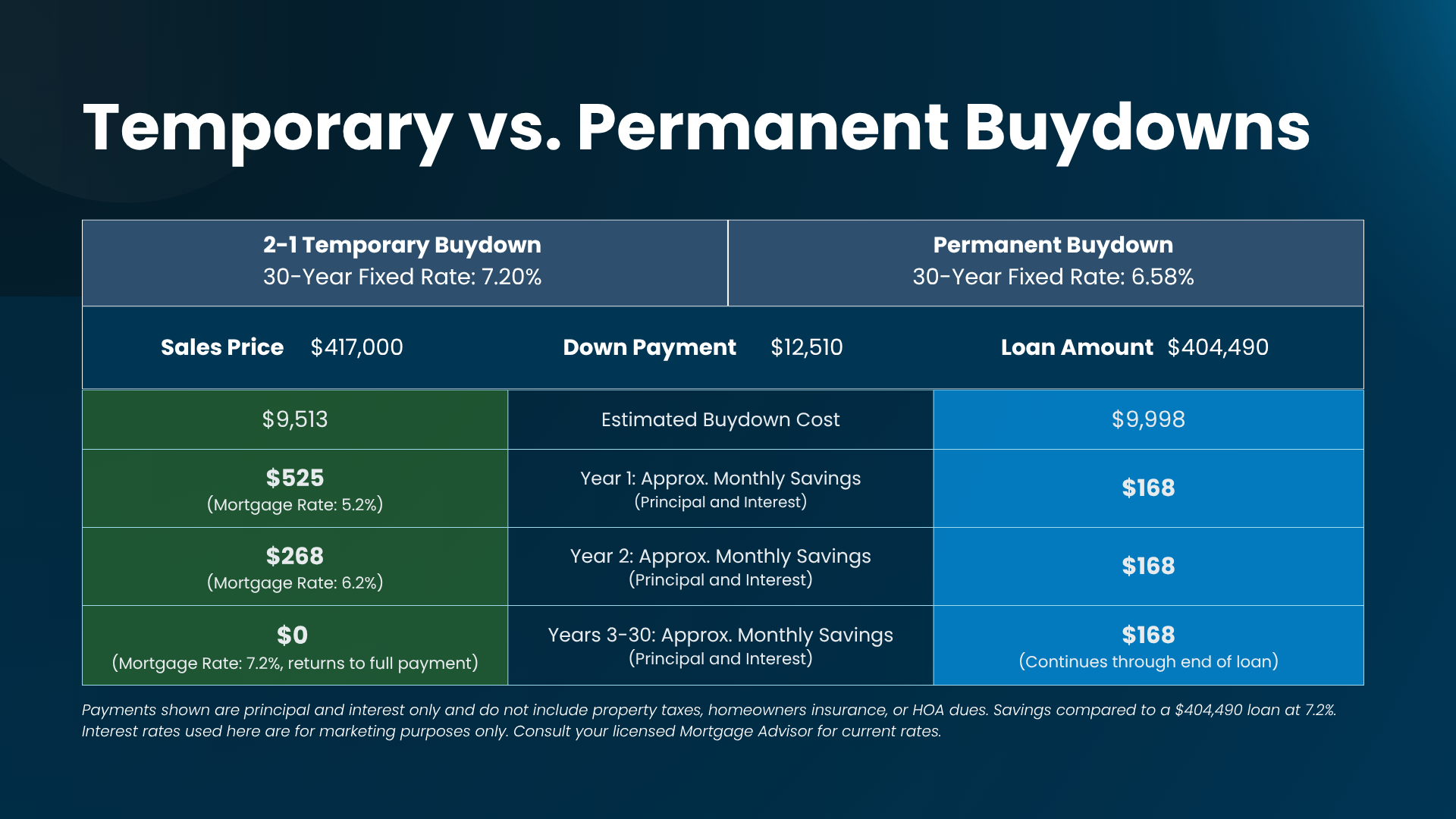
Here’s an example comparing a seller-paid 2-1 temporary buydown with a permanent buydown on a median-priced home. In this case, the seller covers the upfront costs. Keep in mind that these are just estimates, and your actual numbers may be different.
In this example, the temporary buydown saves you about $520 per month during the first year, while the permanent buydown saves around $170 per month.
Keep in mind that the savings from a temporary buydown won't last forever. Once the buydown period ends, you'll start making the full mortgage payment. That's why it's important to look at the long-term costs, not just the savings during the first year.
How To Know if a Buydown Makes Sense for You
This is where a lender can help you figure out what works best for you. A buydown isn't the right fit for everyone. It really depends on your budget, how long you plan to stay in the home, and your financial goals.
A temporary buydown can give you some breathing room in your budget during the first few years, especially while you're handling moving costs and getting settled. It may also be a good fit if you expect your income to increase over time.
On the other hand, a permanent buydown may be a better fit if you plan to stay in your home for a long time and want to enjoy lower monthly payments for as long as you have the mortgage.
Whichever option you choose, keep a few important things in mind:
Make sure you can comfortably afford the full mortgage payment, even if you start with a lower payment.
Think about how your budget will look once the temporary buydown ends and your payment increases.
Remember that lenders qualify you based on the full mortgage payment, not just the reduced amount.
Bottom Line
If you've found a home you love but are unsure about the monthly payment, talk with your agent about a possible buydown. Then connect with your lender to see what the numbers could look like for your budget.
A buydown could be another way to make homeownership more affordable, especially if the seller or builder is willing to cover the cost. It might be just what you need to turn "maybe someday" into "welcome home!"