When mortgage rates go up, buying a home can feel like a moving target. Higher rates mean bigger monthly payments, so many buyers are starting to look for other ways to make homeownership more affordable.
More buyers are finding a solution with an adjustable rate mortgage (ARM).
The ARM Option
Here’s the difference between the two. With a fixed rate mortgage, your interest rate stays the same for the life of the loan. With an adjustable rate mortgage (ARM), your rate stays fixed for the first few years, then can go up or down depending on market conditions.
Some buyers aren’t comfortable with the uncertainty, and that’s completely understandable. But others like ARMs because they typically offer a lower starting interest rate. With affordability still a challenge, this option could become more popular.
According to Bankrate, ARM rates in September were more than a full percentage point lower than traditional fixed mortgage rates. Depending on the loan, that could save buyers around $150 to $300 a month on a median priced home.
For some buyers, the lower starting rate can be the difference between waiting and finally buying a home. The numbers show this trend is growing. According to the Mortgage Bankers Association (MBA), about 1 in 10 mortgage applicants chose an ARM in October (see graph below).
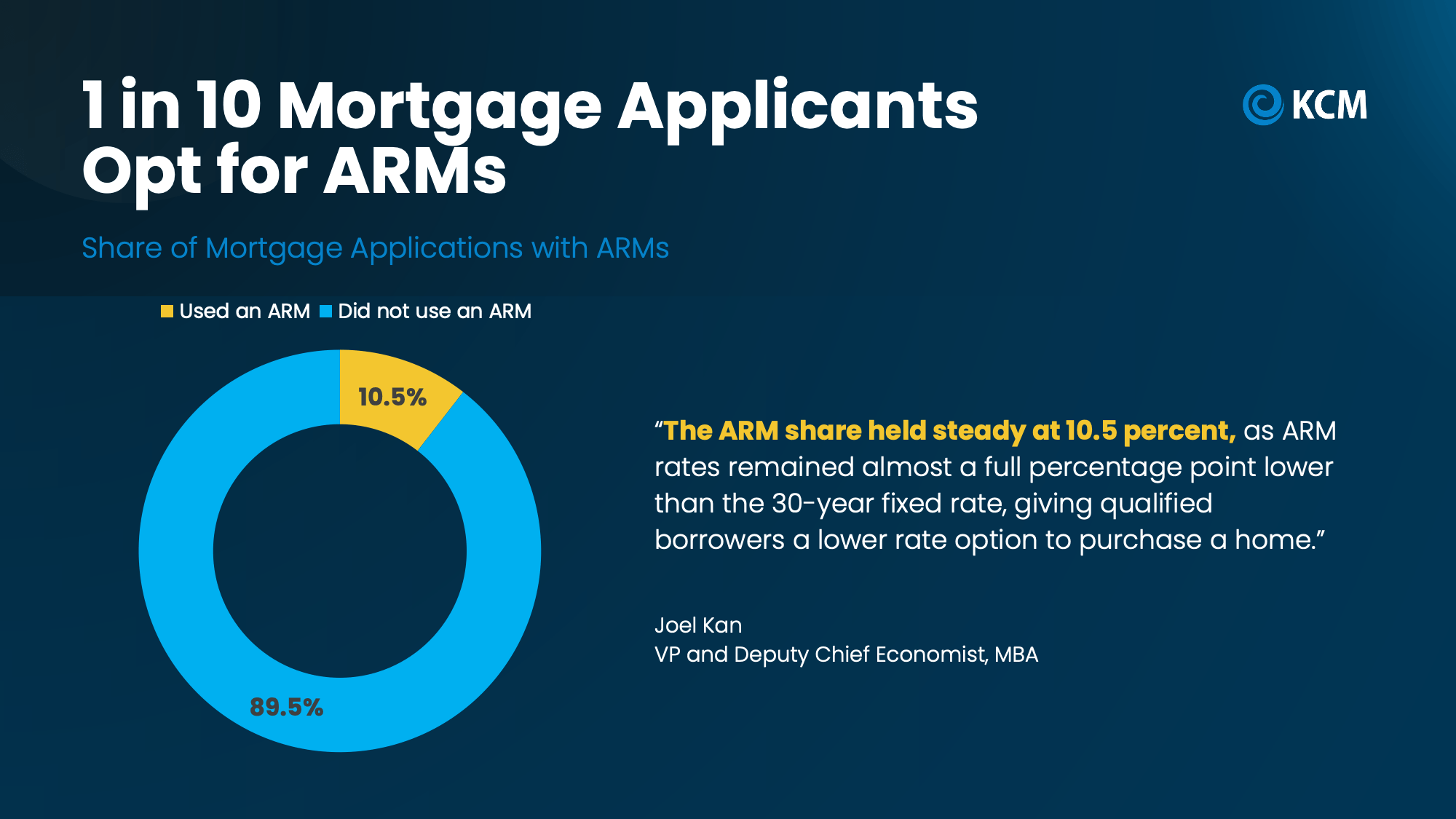
If you’re thinking about getting an ARM yourself, here’s what you need to know about how it works.
The 5/1 ARM
An ARM is similar to a phone or cable plan with a special introductory rate. You start with a lower rate, but it adjusts after a set period. One popular option is the 5/1 ARM.
The “5” means your interest rate stays the same for the first five years, while the “1” means it can change once a year after that. These changes are called resets. Here’s the most important thing to understand.
When your rate resets, your monthly mortgage payment could increase or decrease. The good news is that most ARMs have caps that limit how much your rate can go up each year and over the life of the loan. Either way, it’s important to be prepared for possible changes.
The Upsides and Potential Downsides
To figure out if an ARM is right for you, here are a few things to consider and discuss with your loan officer:
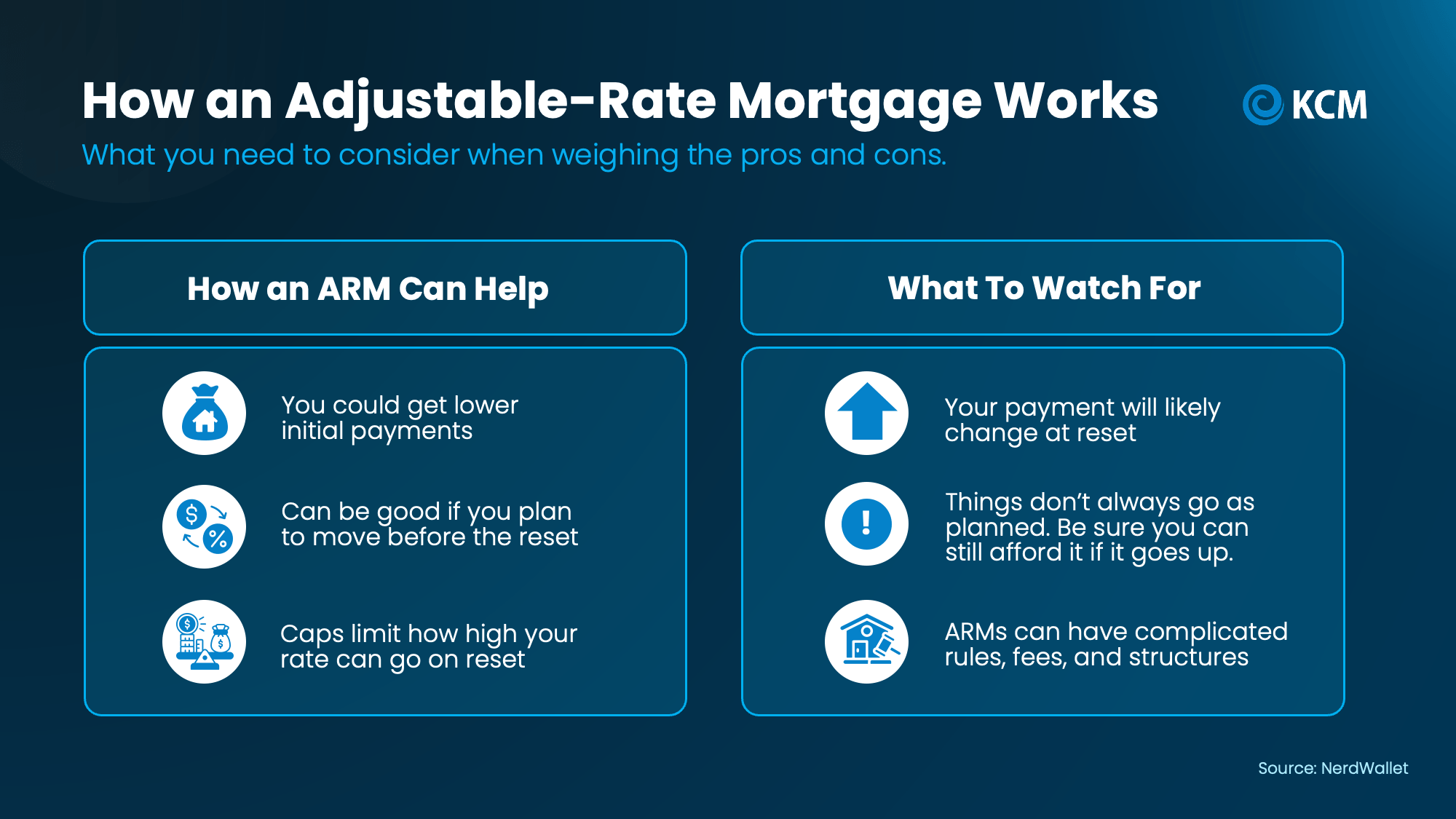
Before making a decision, ask your lender to break down the numbers and explain the different scenarios you might face with an ARM. That way, you’ll know what to expect and can make an informed choice.
Be Ready for the Reset
If you choose an adjustable rate mortgage, remember that you’ll have options when your rate resets. You can:
Keep your current loan if the new payment still fits your budget.
Refinance into a fixed rate mortgage with a payment that stays the same.
Refinance into another ARM with a new introductory rate.
Sell your home.
Contact your loan servicer to discuss assistance or loan modification options.
Keep in mind that refinancing means applying for a new loan, and you’ll still need to qualify even if you already own the home. Keep an eye on your credit and debt, and ask your loan officer how big financial decisions, like changing jobs or making major purchases, could affect your chances of qualifying. Staying financially prepared is key.
Today’s ARMs Aren’t Like 2008
One important thing to know is that ARMs got a bad reputation after the 2008 financial crisis. Back then, some loans had low starting payments that later increased dramatically. Others even allowed people to borrow without proving their income.
Today, there are stronger rules in place to protect both borrowers and lenders. One of the biggest is the Ability to Repay Rule, which requires lenders to verify your income using documents like pay stubs, W 2 forms, and tax returns. They also have to consider whether you can afford the higher payment after your rate resets, not just the lower starting payment.
The good news is that today’s ARMs have stronger safeguards, so they’re not the same risky loans we saw during the 2008 housing crisis.
Bottom Line
Today’s market offers more options than you might think. Learning about options like ARMs could help you find a more affordable path to homeownership. A trusted lender can break down the numbers, explain different scenarios, and help you decide what works best for your budget.
Could an ARM be right for you? Talk to a loan officer to explore your options and see what works best for your budget.